


Discover the top 10 Cyber Security GRC strategies for 2025 and understand why they matter more than ever. In a rapidly evolving digital landscape, cyberattacks are becoming more frequent, regulations are getting stricter, and businesses are under constant pressure to safeguard sensitive data. Governance, Risk, and Compliance (GRC) practices provide the foundation for addressing these challenges by creating structured policies, measuring risks in financial terms, and ensuring organizations remain compliant with global standards.
These strategies are not just about preventing penalties or passing audits—they are about building long-term digital trust, enhancing organizational resilience, and staying ahead of competitors in a threat-filled environment. By implementing strong GRC practices, companies can reduce the cost of breaches, maintain customer confidence, and position themselves as industry leaders in security and accountability.
Table of Contents
- What is Cyber Security GRC?
- Why GRC Matters More in 2025
- Strategy 1: Strengthening Governance Frameworks
- Strategy 2: Risk Quantification with AI
- Strategy 3: Regulatory Compliance Automation
- Strategy 4: Cloud Security and GRC Integration
- Strategy 5: Zero Trust in GRC Programs
- Strategy 6: Vendor Risk Management
- Strategy 7: Security Awareness and Human Factor
- Strategy 8: Incident Response and Digital Forensics
- Strategy 9: Continuous Monitoring and Reporting
- Strategy 10: Building a Culture of Cyber Resilience
- Final Thoughts
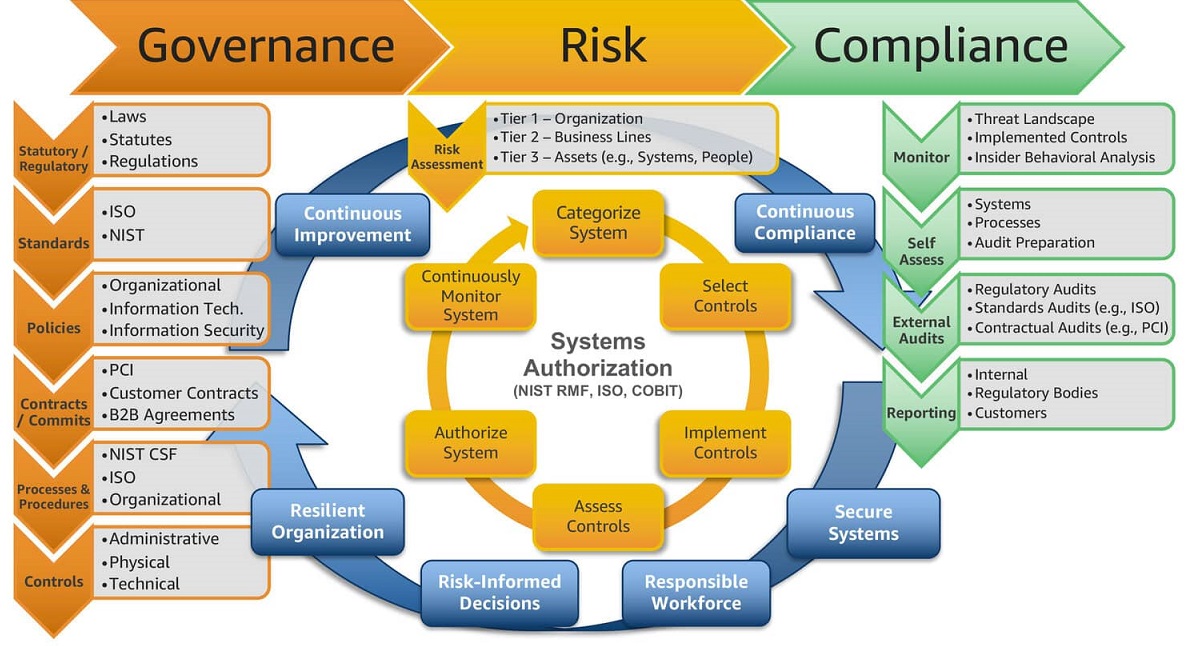
Cyber Security GRC Strategies

What is Cyber Security GRC?
Cyber Security GRC (Governance, Risk, and Compliance) refers to the structured approach organizations use to govern policies, manage risks, and comply with regulations in the digital landscape. It connects security decisions with business strategy, ensuring that every action—whether adopting a new cloud service or handling customer data—meets both legal standards and trust expectations.
In today’s hyper-connected world, where ransomware attacks, phishing scams, and AI-driven threats are skyrocketing, GRC is not just a framework—it’s a lifeline. Without it, businesses risk massive data breaches, multi-million-dollar fines, and the collapse of customer confidence.
Why GRC Matters More in 2025
The global cost of cybercrime is projected to hit $10.5 trillion annually by 2025, according to Cybersecurity Ventures. Regulations are also getting stricter, with GDPR, HIPAA, CCPA, and AI-specific regulations demanding greater accountability.
Here’s what matters: organizations that embed Cyber Security GRC into their DNA are the ones building digital trust. And in a world where consumers care about privacy, transparency, and accountability, trust is the most valuable currency.
Strategy 1: Strengthening Governance Frameworks 🏛️
Governance provides clarity. Without it, even the best security technologies fail. Organizations should define clear roles, responsibilities, and decision-making frameworks. Leadership must align GRC with overall business strategy, ensuring it’s not just an IT concern but a company-wide priority.
👉 Example: A global enterprise might map its GRC objectives directly to each department’s business goals, ensuring accountability and transparency at every level.
Strategy 2: Risk Quantification with AI 🤖
Traditional risk assessments are often subjective. AI now allows companies to quantify risks in financial terms. Instead of saying, “This vulnerability is critical,” teams can say, “This vulnerability could cost us $2 million in downtime.”
AI-driven platforms like FAIR and advanced dashboards are making risk-based decision-making far more precise.
Strategy 3: Regulatory Compliance Automation 📜
Manual compliance is slow, error-prone, and expensive. With regulations constantly evolving, organizations must adopt compliance automation platforms. These systems can automatically map controls to frameworks, track regulatory updates in real-time, and generate audit-ready reports with minimal effort.
👉 For example, many enterprises that have shifted from manual spreadsheets to automated compliance tools report reducing their workload by up to 60%, while also lowering the risk of regulatory penalties.
Strategy 4: Cloud Security and GRC Integration ☁️
With cloud adoption soaring, organizations must integrate Cloud Security Posture Management (CSPM) with GRC. This ensures visibility across multi-cloud environments and avoids compliance gaps.
Tip: Always verify that your cloud vendors hold certifications like ISO 27001, SOC 2, and NIST compliance.
Strategy 5: Zero Trust in GRC Programs 🔒
The Zero Trust model—“never trust, always verify”—is now central to GRC. Organizations must integrate Zero Trust principles into policies covering user access, device management, and network monitoring.
When combined with GRC, Zero Trust ensures compliance is continuous, not just a checkbox during audits.
Strategy 6: Vendor Risk Management 🌐
Third-party vendors introduce hidden risks. A 2023 survey revealed that 60% of breaches involved third parties. Strong GRC means conducting regular vendor assessments, contractual compliance checks, and continuous monitoring.
👉 Target’s 2013 data breach started through a vendor, highlighting why vendor GRC cannot be ignored.
Strategy 7: Security Awareness and Human Factor 🧑💻
Technology can’t solve everything. Over 80% of breaches occur due to human error. Embedding security awareness into GRC frameworks ensures people become the first line of defense.
Phishing simulations, gamified training, and reward systems make employees more vigilant while reinforcing compliance.
Strategy 8: Incident Response and Digital Forensics 🚨
A robust GRC program must include incident response playbooks. Clearly define escalation paths, forensic readiness, and legal reporting requirements so that your team can act quickly when a breach occurs.
👉 Research shows that organizations able to contain a breach within 200 days save on average over $1 million compared to those that respond more slowly.
Strategy 9: Continuous Monitoring and Reporting 📊
Annual audits are no longer enough. GRC in 2025 demands continuous monitoring with real-time dashboards.
By automating compliance checks and generating executive-friendly reports, companies can respond to threats instantly, not months later.
Strategy 10: Building a Culture of Cyber Resilience 💡
Cyber resilience means not just preventing attacks but bouncing back stronger after incidents.
Leadership must champion a culture of resilience, where GRC isn’t seen as a burden but as a strategic enabler of growth.
👉 Example: Forward-thinking companies are embedding resilience metrics into boardroom KPIs.

Final Thoughts
Cyber Security GRC in 2025 goes beyond mere compliance. It’s about building digital trust, strengthening resilience, and staying competitive in a world full of threats.
Organizations that treat GRC as a strategic investment not only sidestep penalties but also attract customers, investors, and partners who value accountability and transparency.
📌 Next Steps:
-
Explore widely respected cybersecurity frameworks (e.g., NIST)
-
Explore an AI-powered GRC platform that streamlines compliance, risk detection, and digital forensics—visit [grchive.com].
Discover more from Cyber GRC Hive
Subscribe to get the latest posts sent to your email.